
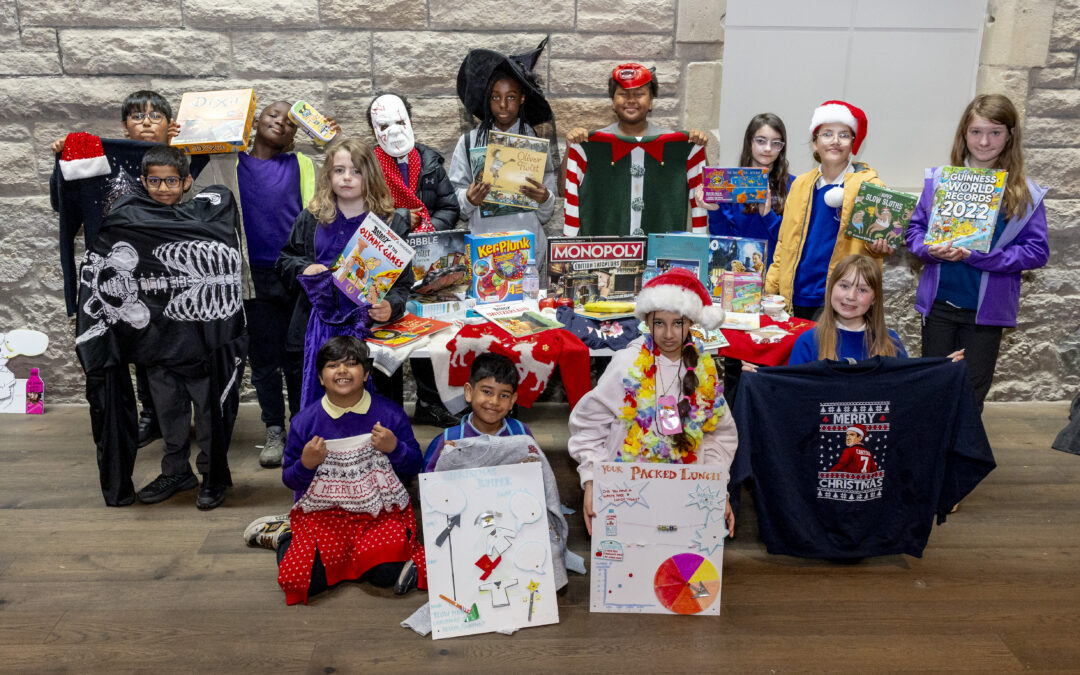
Scottish primary and secondary pupils have pioneered practical and straightforward projects that could cut waste and save money for schools throughout the country.
One – a clever but simple redesign of primary school packed lunches – has the potential to cut costs by £31 million and eliminate nearly 39 million pieces of single use plastic – if introduced nationwide.
Other initiatives involved collecting used Hallowe’en costumes, unwanted toys and old Christmas jumpers for reuse the next year, or as donations to charity shops.
Some 50 pupils from the six schools taking part in the Zero Waste Schools Pilot, run by Edinburgh-based circular economy* organisation Ostrero, will gather at the Edinburgh Futures Institute on 4 June to present their results.
Mary Michel, Ostrero co-founder and director, said: “Young people want to improve their schools and their communities – this project empowered them to do that.
“At the same time schools tell us that they would love to find ways to cut waste and save money, but don’t know where to start.
“This pilot found ways to achieve that – and the really important thing is that they are all ideas that the children came up with themselves and that have been fully tested.
“These are imaginative, straightforward – and often fun – ways to make small changes that have a big impact.”
The children will present their projects to an audience of decision makers from government and local authorities.
Casper, of Castleview Primary P7, which has carried out the packed lunch redesign, said: “We hope that our ideas for better packed lunches will mean that children all over Scotland can help their schools cut waste and save money.”
Fay from P5 added: “It was good seeing how a small change had such a big impact.”
Anna Dove, from Barrhead High School, added: “Circular economy design principles have helped make a real difference within my school – We have started a school uniform swap and Christmas jumper swap which is more sustainable and cuts down clothes waste.
“I have enjoyed getting to learn more about the circular economy and how it can impact us a society, for example how we could run out of resources to make technology such as phones if we didn’t start reusing them.
Teachers from the schools will also be present and have praised the impact and benefits of the pilot.
Laura Marshall, teacher, Echline Primary School said: “Learning how to reduce waste in our school and community has helped us to create a more sustainable environment and encouraged young people to see problems like waste as opportunities for creativity and change.
“As part of the Zero Waste Schools pilot, the young people have used their voices to share ideas and run initiatives that encourage everyone to reduce waste.”
Lisa Allan, teacher, Barrhead High School, added: “The Zero Waste Schools pilot has empowered our learners to lead by example.
“By both driving and participating in projects like the S2 Circular Economy IDL and reducing our carbon footprint through improved digital signatures, our young people have turned simple changes into a real cultural shift.
“From uniform and Christmas jumper swaps to school-wide plastic and can recycling, they aren’t just learning about the future – they are developing the skills to build it.”
The event also sees the launch of Ostrero’s Zero Waste Schools Guide, which will be sent to primary schools and every secondary school in Scotland by Qualifications Scotland, giving them the chance to introduce schemes of their own.
Rosemary Mooney, Responsible Business Manager at Qualifications Scotland, said: “Sustainability and the Circular Economy are vital areas of learning that feature across many of our qualifications, so we are delighted to collaborate with Ostrero on bringing this Zero Waste Schools Guide to schools across Scotland.
“The programme helps embed an understanding of everyday circularity into young people’s education in a practical and meaningful way, supporting the continued development of skills among Scotland’s young people.”
Dr Lucy J. Wishart, Programme Director MSc in Circular Economy, Edinburgh Futures Institute, University of Edinburgh, added: “I am delighted to be able to showcase the work of the Zero Waste Schools Project in this event.
“The creative and thoughtful circular interventions the pupils have identified align closely with our approach – where we value critical thinking for solution-focused ideas to support everyday circularity as part of the systemic shift towards a more circular future.
“Embedding the capabilities to challenge, create and change systems is key to achieving more circular and sustainable futures and it’s really encouraging to see how these young people have developed this learning through their projects.”
The school projects
Castleview Primary, Craigmillar, Edinburgh
Project: Packed lunch redesign
A key part of this project involved taking out water bottles and making yoghurts optional. It prevented 20,026 pieces of single use plastic from coming into the school and saved £16,000 in a year. If the redesign was adopted in every primary school in Scotland it would cut out almost 39 million pieces of single use packaging and save over £31m.
- The UK uses 12bn single use plastic drinks bottles a year. Source: UK government
Portobello High School, Edinburgh
Projects: Reuse fairs, reusable cups, battles of the bin
Clothing reuse fairs are held before Christmas each year. Last year they kept over 1,000 pieces of clothing in circulation.
- The UK throws out 300,000 tonnes of clothes a year, less than a fifth is recycled. Source: Business Waste
Echline Primary, South Queensferry
Projects: Hallowe’en costume swap plus a book and toy swap
Pupils gathered 300 costumes. They lent out 200 of these to pupils and donated the remaining 100 to charity shops. P6 pupils gathered 340 books and toys and gave out 240. The remaining 100 were donated to their school’s classroom libraries.
- The UK throws away seven million Hallowe’en costumes a year, with 69% made from non-recyclable plastics, going to landfill or being incinerated. Two in five are only worn once. The average costume costs £15.56 adding up to £510m. Source: Hubbub
St Peter’s Primary, Edinburgh
Project: Holy Handover
Pupils gathered dresses and suits for Holy Communion. These were then made available for the next year’s pupils, saving money and reusing the clothing. This then led to Hallowe’en and Christmas Jumper swaps using the same model.
The other schools taking part were:
- Strathyre Primary, Stirlingshire: No Waste Wednesday and Clean Art Club.
- Barrhead High School: Bottle recycling, composting, digital.
This year is Ostrero’s 10-year anniversary and the event also celebrates its achievements in circular economy education and solutions over that time.
-Ends-
Notes for editors
A circular economy
*A circular economy is an economic model designed to minimise waste and continually reuse resources. Instead of the traditional “take-make-dispose” linear model, it relies on sharing, leasing, reusing, repairing, and recycling materials to extend product lifecycles and regenerate natural systems.
About Ostrero
Ostrero is a small organisation dedicated to growing the Circular Economy in Scotland through clear communication and education. For more information, please see our website at www.ostrero.com or contact Mary Michel on 07752476954 or info@ostrero.com
Media contact: Matthew Shelley, SFPR, 07786 704299 Matthew@Scottishfestivalspr.org
